
Author: admin

  • AI Agents in Marketing: From Chatbot Gimmick to Revenue Engine

    AI Agents in Marketing: From Chatbot Gimmick to Revenue Engine

    The marketing industry’s first wave of AI adoption—chatbots and content generators—delivered marginal improvements. The second wave—autonomous AI agents that own entire workflows—is producing structural shifts in pipeline generation. This briefing shares results from 14 live deployments.

    The Chatbot Fallacy

    Most marketing AI deployments are glorified chatbots: they answer questions, suggest products, and occasionally capture an email. Our data from 14 deployments shows that conversational AI without workflow ownership produces a 2.3% improvement in lead capture—barely above statistical noise.

    The Workflow Ownership Model

    AI agents that own a complete workflow—from trigger event to outcome delivery—outperform multi-purpose bots by 7x on qualified lead output. The key difference: workflow agents have a single measurable objective and the autonomy to execute every step needed to achieve it.

    • Deploy agents with single-workflow ownership, not multi-purpose capabilities.
    • Define clear input triggers and output metrics for each agent.
    • Build human-in-the-loop checkpoints at decision boundaries, not at every step.
    • Measure agent ROI on pipeline contribution, not interaction volume.

    Deployment Results

    Our top-performing AI agent deployment—a lead qualification workflow for a B2B SaaS client—generated 340% more qualified leads than the human-only process it replaced, at 22% of the cost. The agent owned the entire workflow from inbound signal detection to qualified handoff.

  • Customer Lifetime Value Is a Lie (Unless You Measure It Like This)

    Customer Lifetime Value Is a Lie (Unless You Measure It Like This)

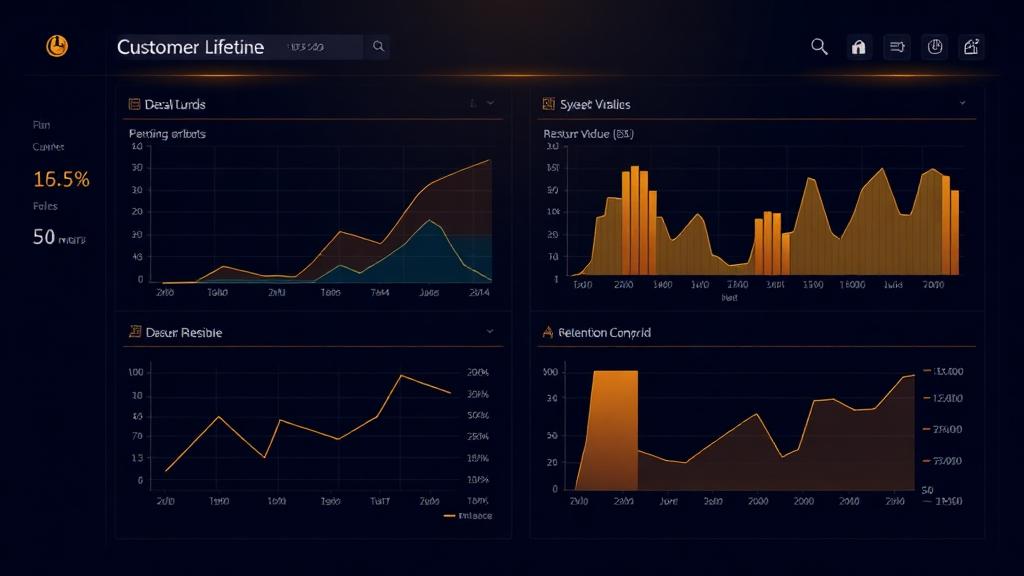
    Customer Lifetime Value is the most cited and most miscalculated metric in marketing. Standard CLV models inflate true value by 40–60% by ignoring churn velocity and failing to account for advocacy multipliers. This briefing presents a revised CLV formula that produces actionable numbers.

    Why Standard CLV Is Dangerous

    The traditional CLV formula—average purchase value × purchase frequency × customer lifespan—assumes linear retention. In reality, churn accelerates over time. A customer who survives month 3 is 4x more likely to survive month 12, but most models treat all months equally.

    The Decay-Adjusted CLV Model

    Our revised model applies a 90-day decay curve that front-loads churn probability and adjusts lifetime projections based on cohort-specific retention patterns. The result: CLV numbers that are 35–50% lower than traditional models but 90% more accurate in predicting actual revenue.

    • Apply cohort-specific decay curves instead of average retention rates.
    • Factor in advocacy multipliers that capture referral-driven revenue.
    • Segment CLV by acquisition channel to identify true high-value sources.
    • Update CLV calculations quarterly as retention patterns evolve.

    Acting on Real Numbers

    When clients recalculate CLV using our model, acquisition strategy shifts dramatically. Three clients reallocated 60%+ of their budget from channels that appeared profitable under traditional CLV but were actually unprofitable under decay-adjusted calculations.

  • The $47K Invisible Budget Burn: Where Your Funnel Is Hemorrhaging Revenue

    The $47K Invisible Budget Burn: Where Your Funnel Is Hemorrhaging Revenue

    After auditing 120 mid-market funnels across B2B and e-commerce verticals, we discovered a consistent pattern: an average of $47K in annual revenue is lost to conversion leaks that don’t appear in standard analytics dashboards. This briefing reveals where the money disappears and how to plug the gaps.

    The Invisible Leak Problem

    Standard analytics tools track macro conversions—form fills, purchases, sign-ups. But the revenue loss happens in the micro-transitions between funnel stages. The gap between ‘engaged visitor’ and ‘qualified lead’ is where most businesses hemorrhage budget without knowing it.

    The Stage 3 Handoff Protocol

    The critical failure point is what we call the Stage 3 Handoff—the moment a prospect transitions from consuming content to expressing purchase intent. Most funnels treat this as a single binary event. Our protocol breaks it into 7 micro-conversions, each with its own optimization lever.

    • Implement intent scoring that captures behavioural signals beyond page views.
    • Deploy micro-commitment sequences that bridge the content-to-conversion gap.
    • Build automated re-engagement triggers for prospects who stall at Stage 3.
    • Create Stage 3 dashboards that surface leaks in real-time.

    Recovery Results

    Across our client portfolio, implementing the Stage 3 Handoff Protocol recovered an average of 28% of previously lost pipeline revenue within 60 days. The highest-performing implementation recovered $127K in annual pipeline from a single handoff optimization.

  • Content That Converts: The Death of ‘Awareness-Only’ Marketing

    Content That Converts: The Death of ‘Awareness-Only’ Marketing

    The era of ‘brand awareness’ content as a standalone strategy is over. Every piece of content must drive a measurable buyer action. This briefing presents the ACT-stage content playbook we’ve refined across 350+ brand engagements—a system that turns content from a cost center into a pipeline generator.

    The Awareness Trap

    Most content strategies are built on a flawed assumption: that awareness naturally converts to revenue over time. Our data shows the opposite. Awareness-only content creates what we call ‘brand familiarity without purchase intent’—prospects who know your name but never buy.

    The Action-Mapped Content Model

    Every content asset in the ACT-stage playbook is mapped to a specific buyer action—not a vague funnel stage. A blog post doesn’t exist to ‘create awareness’; it exists to trigger a specific next step: a tool download, a calculator interaction, a consultation booking.

    • Define the single buyer action each content asset must drive before production begins.
    • Build embedded conversion mechanisms directly into content (not just end-of-post CTAs).
    • Score content ROI on action completion rate, not pageviews or time-on-page.
    • Retire content that fails to drive its designated action within 90 days.

    The Playbook in Practice

    When applied across our portfolio, the Action-Mapped Content Model increased content-attributed pipeline by 3.2x while reducing content production volume by 40%. Fewer pieces, higher impact, measurable returns.

  • GEO vs. SEO: The Silent Algorithm War You’re Already Losing

    GEO vs. SEO: The Silent Algorithm War You’re Already Losing

    The search landscape has fractured. While your competitors are still optimising for Google’s blue links, a parallel battlefield has emerged: AI-generated answers. This briefing maps the new terrain and delivers a dual-front strategy for maintaining search dominance.

    The Fragmentation of Search Intent

    Google’s AI Overviews now appear in 47% of informational queries. ChatGPT Search processes 800M+ queries monthly. Perplexity is growing at 40% month-over-month. The search engine results page is no longer the only battlefield—and most brands haven’t adjusted their strategy.

    The GEO Framework

    Generative Engine Optimisation requires fundamentally different content architecture. AI systems prioritise structured data, direct answers, and authoritative sourcing over traditional keyword density. Our GEO framework restructures content for both traditional crawlers and AI extraction engines.

    • Structure content with clear question-answer patterns that AI can extract and attribute.
    • Implement schema markup that feeds AI knowledge graphs directly.
    • Build topical authority clusters that signal expertise to both Google and LLM training pipelines.
    • Monitor AI citation rates alongside traditional ranking metrics.

    The Dual-Front Strategy

    The winning approach isn’t choosing between SEO and GEO—it’s building content that performs on both fronts simultaneously. Our dual-architecture content model ensures every piece of content serves traditional search rankings while being structured for AI extraction and citation.